Why it's so hard to find a McRib

Lovers of Elusive McRib Pork Patty Track Their SightingsBefore traveling to visit his parents in Nebraska last winter, Jeremy Duensing consulted what he always checks before a trip: the "McRib Locator" website.To his delight, he found a McDonald's (NYSE: MCD - News) restaurant near Omaha that, unlike most of the burger chain's 14,000 U.S. restaurants, had the McRib on its menu. He bought six of the pork sandwiches.

Five drinks that help you de-stress

Stressful day? Don't reach for a candy bar. Try one of these soothing liquids instead. © Michael Blann/Digital Vision/Thinkstock 1. Drink a glass of milk. It contains tryptophan, which as it is metabolized is converted to mood-boosting serotonin. Plus, its calcium, magnesium and potassium content may help keep blood pressure down.2.

10 dumb money moves to avoid

My 28-year-old niece and I were recently talking about money. She's (finally!) become interested in accumulating more and spending less, and because I've been in the personal finance business in one capacity or another since before she was born, she logically assumed that I've always done everything right and know exactly what to do at all times.

The fastest-growing American cities

The U.S.' emerging cities are not experiencing the kind of super-charged growth one sees in urban areas of the developing world, notably China and India. But unlike Europe, North America's population is slated to expand by well over 100 million people by 2050--much of this growth in the U.S. and much of it driven by continued immigration.

How to detect ATM skimming

Skimming devices placed over card-reader slots capture your information.The next time you pull up to an ATM, take a closer look at the machine. Does it look a little clunkier than usual?Look too at what's around you: Are there mirrors? Is there a brochure holder over your shoulder? Does it look like there might be a false panel or an extra light bar attached to the machine?If something looks or feels amiss.

Showing posts with label how to. Show all posts

Google: Search MediaFire for Free Videos, Music, Comics, and Archives 0

xoiper | 9:45 AM |


MediaFire is a free file hosting service that offers unlimited storage space and up to 100MB per file which equates to a lot of files to search through for free videos, music, and much more. By using Google, you can check to see what others have posted for download.


To look for music files, use this:

Google: site:mediafire.com mp3|wma|ogg

For a specific artist, include the artist’s name:

Google: site:mediafire.com mp3|wma|ogg daughtry

For a specific song, include the song name:

Google: site:mediafire.com mp3|wma|ogg “over you”

For video files, use this:

Google: site:mediafire.com asf|rm|avi|mp4|wmv|flv

For Comics, use this:

Google: site:mediafire.com cbr|cbz

To search for a specific comic title, include it in the query:

Google: site:mediafire.com cbr|cbz hulk

For archives:

Google: site:mediafire.com rar|zip

When you go to the resulting MediaFire page, look for this:


Share/Bookmark

iTunes Sync is Sooooo Slow… [Comic] 0

xoiper | 11:33 AM |

Why is iTunes sync so slow? So painfully and horribly slow? The worst part is when it tells you that it’s backing up your iPod, which seems to hang half the time.

If you are fed up with iTunes and the terrible sync speeds, perhaps it’s time to consider using an iTunes alternative to sync with your iPod.

This comic republished with permission from DOGHOUSE.


Share/Bookmark

How to Download Google Maps for Offline Use 0

xoiper | 11:31 AM |

If you’ve ever wanted to be able to download Google Maps data for offline use, you should check out gmapcatcher, a cross-platform application that caches map segments locally.

There’s both a GUI version and a command-line version that you can use to pull down the maps data. The whole thing is written in Python, but the installer should handle everything for Windows users. If not, install Python and try again.

gmapcatcher [Google Code]


Share/Bookmark

How to Trim the Clutter and Set Up a Minimal Mail.app in Mac OS X 0

xoiper | 11:30 AM |

Getting through thousands of emails is tough when your mail client is bloated and cluttered. OS X’s default mail client, Mail.app, is a pretty minimal application by itself, but how can we make it more minimal, and by extension, efficient?

Today we’ll be showing you how to strip Mail.app down to its essentials, because really all you need in a mail client is something to display emails and reply to them.

Before

This is what Mail.app looks like before our modifications:

Basic Setup

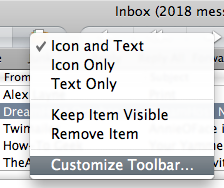
The first step to getting a minimal Mail.app is to hide the toolbars and buttons. Most of the time you’ll never need to use the buttons, as there’s usually a keyboard shortcut. To get rid of them, right click anywhere on the toolbar and select “Customize Toolbar”:

Then, drag everything except the search bar off the toolbar:

Now, you can hide the toolbar by pressing the elliptical button on the right of the titlebar, or by going to View -> Hide Toolbar:

You can access the search bar by hitting Option (⌥)-Shift-F, so if you need to search for something you can show and hide the search bar quickly.

The last thing you should do is hide the mailbox sidebar by either going to View -> Hide Mailboxes or by hitting Command-Shift-M:

That’s the basic setup. Pretty minimal, right? Keep reading to learn how to do everything with keyboard shortcuts, and how to get a more efficient preview pane.

Navigating With Keyboard Shortcuts

Since we’ve hidden almost everything in Mail, we’ll need to get around using keyboard shortcuts. Below is a small list of essential shortcuts that the average person would use on a day-to-day basis:

  • Command (⌘)-Shift-N — Gets new mail
  • ⌘-R — Replies to the currently selected message
  • ⌘-Shift-F — Forwards current message
  • ⌘-N — Creates a new message
  • ⌘-Delete — Deletes current message
  • ⌘-Shift-M — Shows all mailboxes
  • Option (⌥)-Shift-F — Shows the search bar

If you don’t want to have to show the sidebar to navigate to a different mailbox, there’s a shareware Mail plugin called Mail Act-On that will allow you to assign each mailbox a shortcut.

A More Efficient Preview Pane

Since most Macs today come with widescreen monitors, it’s more efficient to have Mail’s preview pane oriented vertically, on the right, next to the messages pane. Mail by default doesn’t come with an option for this, but fortunately there are plugins that can provide it. The one I use is called Letterbox.

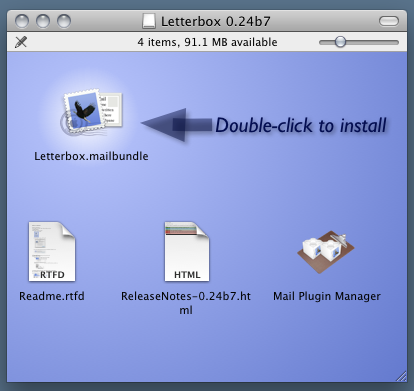
Installing Letterbox is simple: Just download the disk image from their site and double click the .mailbundle:

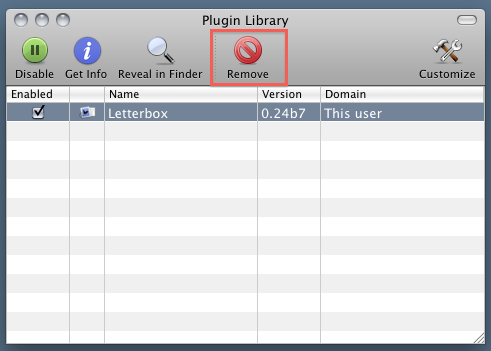
If you ever want to remove Letterbox, there’s also a link to the Mail Plugin Manager in the Letterbox disk image. Open that and you’ll have the option of removing Letterbox:

A popular alternative to Letterbox, known as WideMail, is also available. It’s slightly different in that it will highlight messages with alternating colors, making it easier to distinguish them.

After

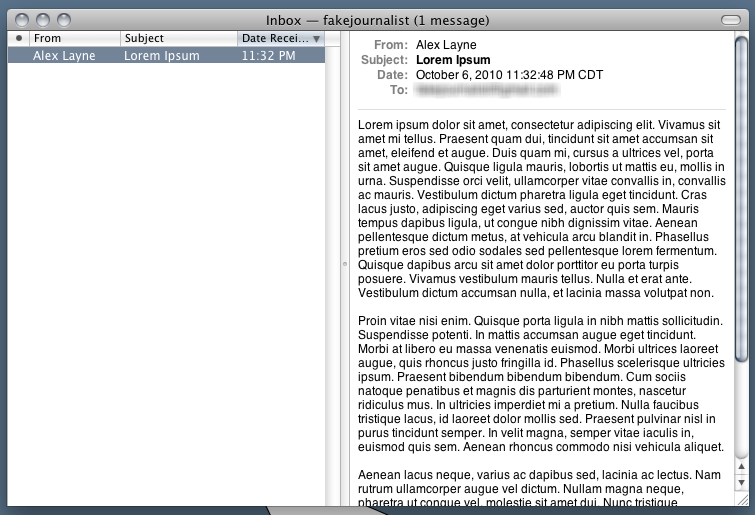
And, finally, this is what Mail.app looks like after our modifications:

This article was originally written on 10/7/10

Share/Bookmark

How to Download Your Photos and Videos from Facebook 0

xoiper | 11:29 AM |

If you’re tired of your photos and videos being impossible to retrieve from Facebook, you’ll be happy to know that they are rolling out a new feature that allows you to download all of them in one big zip file. Here’s how it works.

Since this is a new feature, it’s not yet rolled out to everybody—in fact, we don’t yet have access to it ourselves—so you might want to bookmark this page and come back when the new option shows up for you. If you already see the new options, then let us know in the comments.

How to Download Your Photos and Other Data

First you’ll want to head into the Account menu and choose Account Settings.

sshot-2010-10-07-1-05-43-38

Then underneath the “Account Security” link, you should see a new link for “Download Your Information”. If this link isn’t showing up for you yet, then you will just have to keep checking back every so often until it is there.

image

Assuming the link is there now, you’ll want to click through the Download button.

image

And again, click through the next Download button…

image

And then click through the Okay button.

image

It will take a while for Facebook to put together a file containing all of your information, including your Photos, messages, and other information. Once they have done so, you’ll get an email that says your download is ready, and a link to click.

image

At this point you’ll have to enter your password again, to make sure it is really you.

image

Then click the Download Now button, and you’ll be able to finally download the file containing all your photos.

image

Once the file is downloaded, which might take quite a while, you’ll just have to extract it to access your pictures and other data.

Download Your Photos and Videos – The Video Guide

Here’s a short video that explains how it all works:

In case you’re wondering, we pulled out the steps from the video guide, since some people prefer a step-by-step tutorial instead of a video. Either way, it’s great that we can finally get our photos out of Facebook!


Share/Bookmark

Ask How-To Geek: What’s Wrong With Writing Down Your Password? 0

xoiper | 11:27 AM |

image

Recently a reader asked me why she wasn’t supposed to write down her passwords—which is a very good question. Ignoring all the geeky password manager talk, why can’t a home user write down passwords? Let’s examine this topic more closely.

If you’ve never heard anybody say this, you probably haven’t talked to enough network security types—it’s generally looked down on to write your passwords on a physical piece of paper or a sticky note.

So Why Can’t You Write Down Your Password?

We’ve already established that you aren’t “supposed” to write down your passwords, but why not? Are people really going to rifle through your stuff to find your password, and then use it maliciously? What if somebody breaks into your house, are they going to sit down at your PC and use your password? The answer to all of this can be summed up easily:

  • Work Users: Do Not Write Down Your Password
  • Home Users: Writing Down Passwords Is Fine, Usually

To put these in a little more context, let’s look at each one separately and discuss why you should or shouldn’t write down your password.

If You’re a Work User

image

When you’re a corporate sloth and stuck at a desk for an arbitrary number of hours each day bored out of your mind, most of the passwords that you will use are probably for work-related applications like your corporate email, databases, and accounting systems.

Here’s why you probably should not write down your password at work, and should instead opt for passwords that you can remember, or use a password manager:

  • It’s probably against your company’s policies to write down your password.
  • If somebody finds the password and does something bad with your account, you could get fired.
  • Even if you write down the password and lock it up, it’s probably not terribly secure.
  • What are you going to do, cover the sticky note with your hand when the cleaning staff comes by?
  • All the IT people will laugh at you.

You should also figure out what your organization’s policies are concerning passwords, and follow those.

If You’re a Home User

imageWhen you are a home user, your most important passwords are your email, bank, and probably your Facebook password. If you are using a password on Windows, it’s probably not terribly secure, but you should make absolutely certain that your email and bank passwords are secure—and not the same.

Here’s why it doesn’t really matter if you write down your password at home (usually, at least)

  • If somebody has physical access to your PC, you are screwed, and your password can easily be cracked or reset. (see below)
  • If somebody breaks into your house, they could just take the whole PC or laptop. They might also steal your beer.
  • The biggest problem for home users is having their banking / email passwords stolen online. If writing down a tough password helps keep you from identity theft, go for it.

There are exceptions to these rules of course—if you’re sharing an apartment with other people that you don’t totally trust, you should probably move. Also, you might not want to write down your passwords, and opt for a tough password or a password manager application. Maybe sleep with one eye open.

If you’re a home user with kids around, you might not want to write down the Windows password if there’s adult material on your PC. Or the internet—I hear there’s some adult content there too.

Choosing Strong, Unique Passwords Is All-Important Online

image

We simply can’t state this enough—your email and banking passwords are extremely important, and you should use different strong passwords for each one. Here’s a couple of quick rules to help you stay safe:

  • Use separate passwords for your online accounts—otherwise, if somebody cracks one password, they can access all accounts.
  • Use strong passwords for your accounts, using a combination of letters and numbers.
  • Do not use the name of your pet, child, significant other, insignificant other, school, mom, or anything that somebody could easily guess.
  • Make sure the security question on your email or bank account is set to something unique, and write it down somewhere. Do not blindly answer the question and use your pet’s name or something somebody can easily figure out. This is how most passwords are cracked.

If writing down these passwords and secret questions helps you be able to use strong passwords and prevent identity theft, it’s worth it, right?

Your Windows Password Is Easily Crackable

image

If somebody has physical access to your PC for a couple of minutes, it doesn’t matter what Windows, OS X, or Linux password you use. It’s as simple as that.

Want proof? Here’s all the ways that your computer password can be cracked or reset, and keep in mind that these are only the ways that we’ve covered here on How-To Geek. And we’re the good guys!

Wow, that sure makes me feel secure! So how do you prevent this, you ask? You can use complete drive encryption if you choose to do so:

Since your vacation photos of you eating too much probably aren’t worth encrypting, your best bet is actually…

Password Managers Are Your Best Bet

Using a good password manager is the best way to protect your passwords from everybody and easily use secure passwords for every site. All of your passwords will be secured behind nearly unbreakable encryption, and easily accessible for everyday use.

My personal favorite password manager is LastPass, which integrates directly into your browser, and stores the encrypted passwords on their servers, syncing them to every device you can install the extension on. You can even use it to store other data, like notes or credit card numbers.

Note: While the passwords may be stored on their servers, the great thing is that the master encryption key is not—all the passwords are decrypted in your browser, so they cannot see any of your password information.

image

You can also use KeePass, which is an excellent password manager with loads of plugins and other features. I don’t use it because it’s separate from the browser, which is where all my passwords need to be used, but it’s still a worthy application.


Share/Bookmark


po themes Copyright © 2010 Prozine Theme is Designed by Lasantha Home | RSS Feed | Comment RSS